The Deed and the Wage · Episode 1 of 10 · 23 min
How Land Ownership Invented the Boss
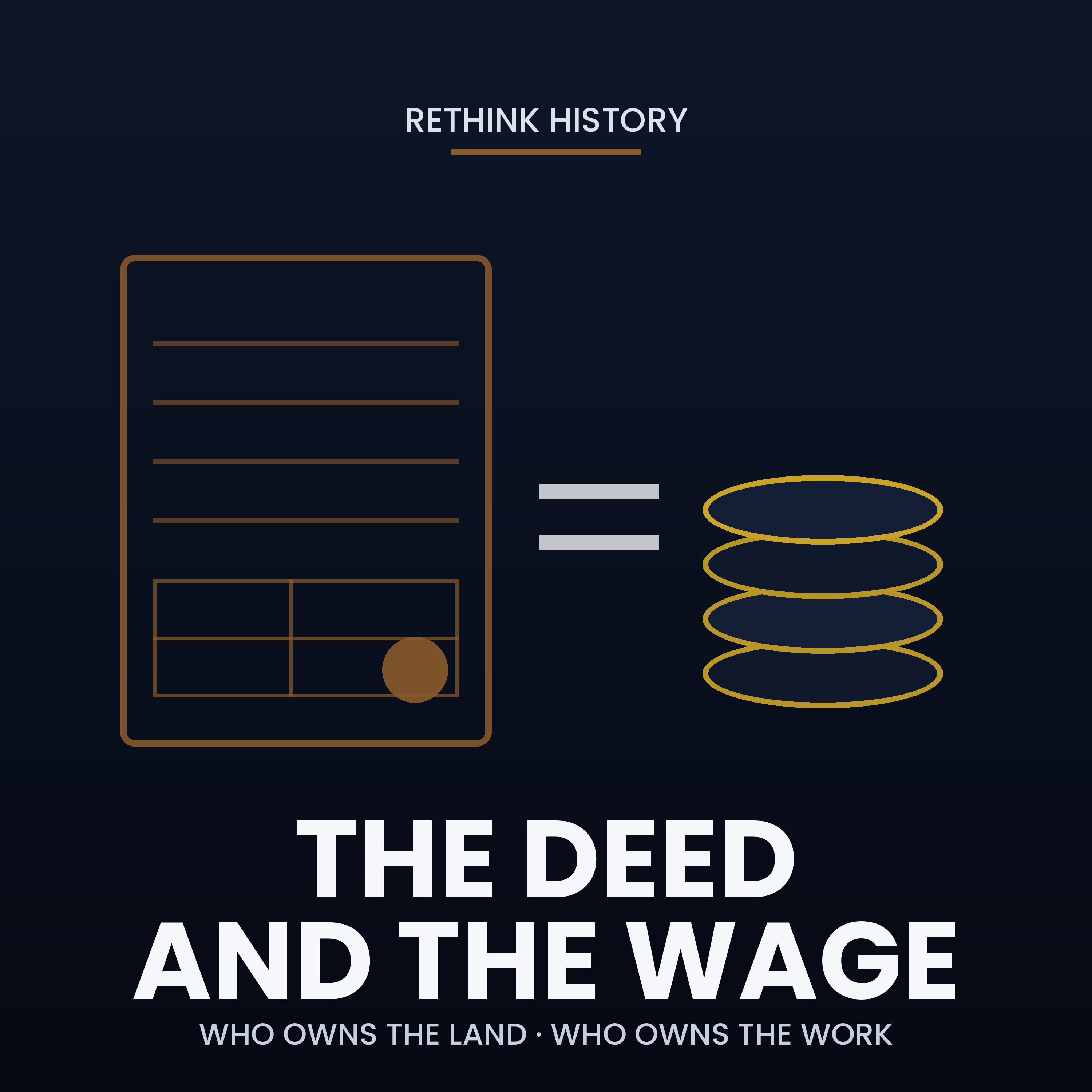
For roughly 290,000 of our 300,000 years, humans owned no land and commanded no one's labor. Within a few thousand years of settling to farm, the first written records appear as ledgers of fields, boundaries, and workers counted, rationed and obligated. The episode argues the deed and the wage were born together, with the deed first by a whisker, if at all.
Who's who
- KushimUruk administrator, possibly the first person whose name survives in writing
- UrukaginaRuler of Lagash whose reforms complain of officials seizing fields and dues
- Ur-NammuFounder of the Ur III state
- ShulgiKing of Ur whose administration produced dense labor documentation
- James C. Scott+1 more episodePolitical scientist and author of Against the Grain on early states
Where it happens
- Uruk, MesopotamiaSite of the earliest writing, mostly administrative records
- Ur, MesopotamiaThird Dynasty of Ur, the best-documented command economy
- Lagash, MesopotamiaCity of Urukagina's reform inscriptions
- EgyptCorvée labor attested from the Old Kingdom
- Çatalhöyük, AnatoliaLarge early settlement with little sign of rulers
Timeline
- c. 12,500-9,500 BCENatufian foragers in the Levant live in sedentary villages before farming
- c. 3350-3200 BCEProto-cuneiform tablets at Uruk record barley, land parcels and dependent laborers
- c. 2350 BCEUrukagina's reforms record the earliest complaint of abused land rights and labor dues
- c. 2112-2004 BCEThird Dynasty of Ur tracks labor gangs, rations and field surveys
- c. 14th-12th century BCEKassite kudurru stones record royal land grants with divine curses
Still debated
Scholars disagree how coercive early states were, with some seeing Ur III corvée as closer to a tax paid in work, and whether living foragers tell us about the deep past. Whether land tenure created labor obligation or states imposed both at once is also open.